
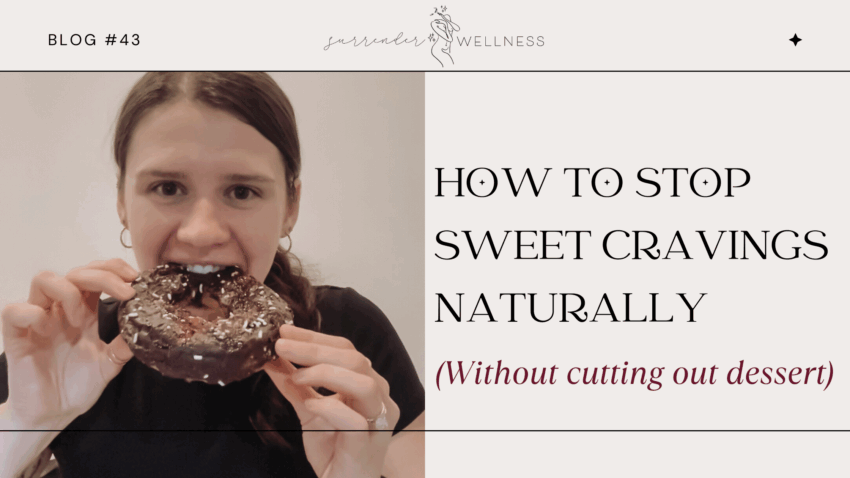
If you find yourself reaching for something sweet every night after dinner… you might be missing some key nutrients throughout your day. Craving sweets after every meal doesn’t mean you’re not broken. You’re not lacking willpower for sticking to a diet. Most importantly, you definitely don’t need to cut out dessert entirely to stop sweet cravings.
What you do need is a little insight into what your body is trying to tell you and how to respond with tools, not restriction.
Let’s talk about why sweet cravings happen and what you can do to feel in control again (without swearing off chocolate forever).
Your Body Craves What You Give It
Here’s the truth most people won’t tell you: your cravings aren’t random.
Your body gets used to what you feed it. So if it’s running on sugar spikes and energy crashes, it’ll keep asking for that quick hit.
This is especially true if your meals are off balance, inconsistent, or missing key nutrients. And the sugar industry doesn’t help either. It’s everywhere and in everything. Depending on your source, the average American consumes over 150 pounds of sugar per year. For some perspective, the World Health Organization recommends staying below 25–50g per day.
I’m certainly not here to guilt trip you. As a fellow chocolate lover and dessert girlie, it’s not about blaming or banning sugar. It’s about learning to listen to your body in a more supportive way. This includes balance.
Why You Crave Sugar
Sugar is a carbohydrate, and carbs increase the release of dopamine, which is the feel-good chemical in your brain. So YES, that cookie actually does make you feel better (but that is only temporarily.)
So why does this matter? Consistent overconsumption can mess with your body big time.
Some common effects of too much sugar include:
- Constipation
- Headaches
- Depression or anxiety
- Insomnia
- Skin issues (like acne or eczema)
- Hormonal imbalances
- Chronic yeast or candida overgrowth
- Mood swings
- Period pain or irregularity
Sound familiar? You’re not imagining it. Sugar affects everything from your gut to your mental health.
Balanced vs. Unbalanced Blood Sugar
Your sweet cravings are often a blood sugar issue NOT a self-control issue. Here’s how to tell the difference.
Signs of Balanced Blood Sugar:
- Consistent energy throughout the day
- Minimal to no cravings for sugar or caffeine
- No sweet cravings after meals
- Easy to fall asleep (and stay asleep)
- Wake up with energy
- Stable moods
- Less joint pain, period pain, or headaches
Signs of Imbalance:
- Energy highs and crashes
- Intense sugar/caffeine cravings mid-morning or after dinner
- Feeling ravenous 30–60 minutes after eating
- Trouble falling/staying asleep
- Struggling to wake up in the morning
- Moodiness, anxiety, overwhelm
Your meals either support stability or spike you into chaos. It’s that simple.
So, What Can You Do?
Here are a few simple strategies that actually work to reduce sweet cravings naturally without being restrictive:
1. Don’t wait until you’re starving to eat
Eat when you’re just starting to get hungry. Not when you’re hangry and ready to raid the pantry.
2. Eat enough to last you 3–4 hours
Under-eating will always lead to cravings later on. Your body will always try to make up for it.
3. No caffeine on an empty stomach
Have your first meal before that coffee. This helps stabilize your cortisol and blood sugar.
4. Eat a high-protein, high-fat breakfast
Within an hour of waking up. This sets the tone for stable energy (and fewer cravings) all day.
5. Walk after meals
It supports digestion and can take your mind off that “I need something sweet” habit loop.
6. Fast 12 hours from dinner to breakfast
This gives your body time to reset without jumping into extremes.
7. Eat in a calm, present environment
Rushed, distracted meals can spike stress and cause overeating or lead to cravings later.
Sugar Isn’t Evil But Balance Is Key
I’m not here to tell you to quit sugar or give up dessert forever.
In my world, food freedom means:
- Sometimes saying no to the sugary coffee or dessert.
- And sometimes saying yes and actually enjoying it.
The goal isn’t perfection. It’s balance.
When you prioritize nutrient-dense foods, build meals with all three macros (plus fiber), and learn how to listen to your body’s cues, everything gets easier. You might not fully be able to stop sweet cravings, as that is part of being human. But learning how to manage them helps you prioritize your health and still enjoy life.
Less guilt. More confidence. Fewer cravings.
You’ve got this.